unilax

Water Treatment Plant

Water Treatment Plant

How Water Treatment Plants Help Industries Improve Water Quality and Operational Efficiency

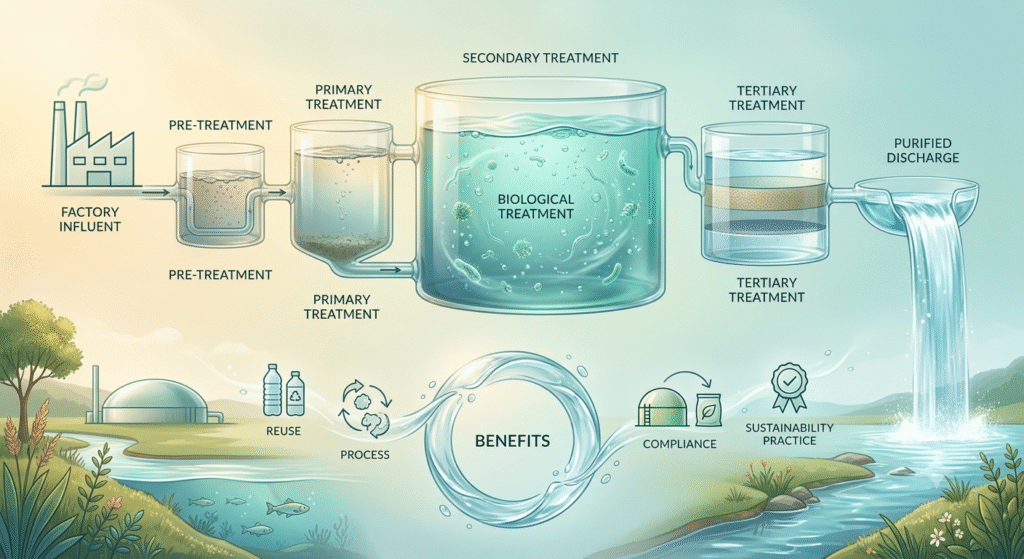
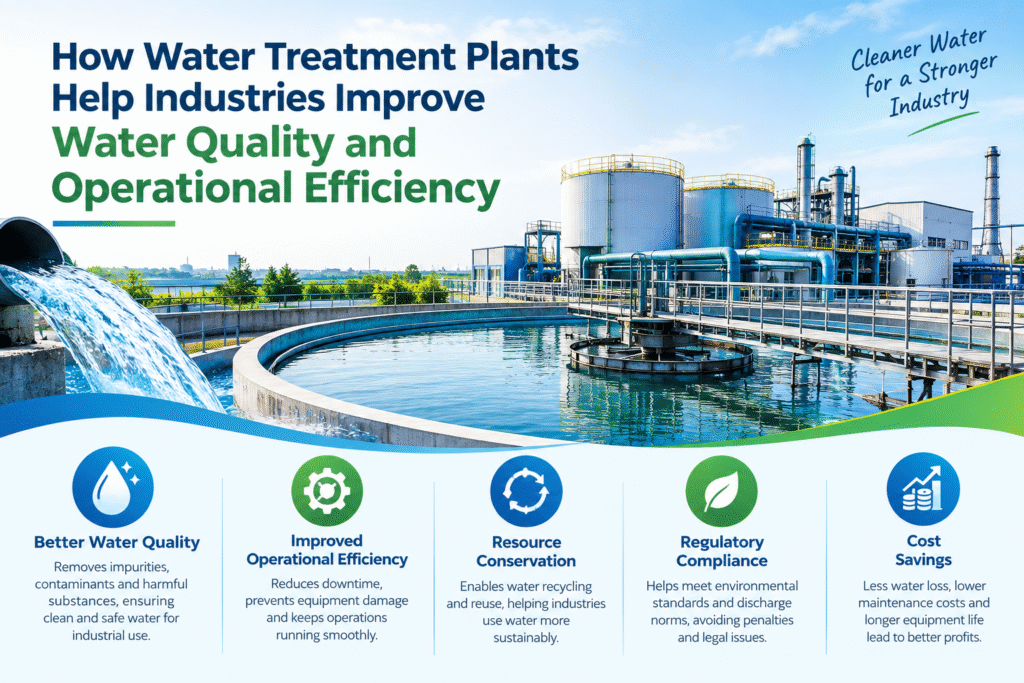
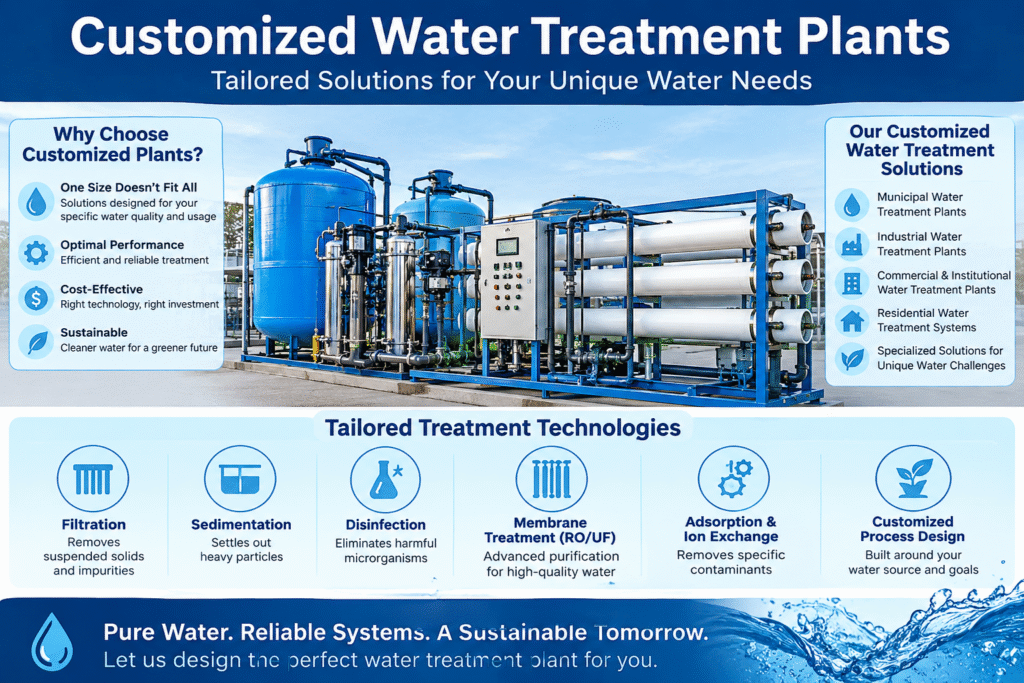
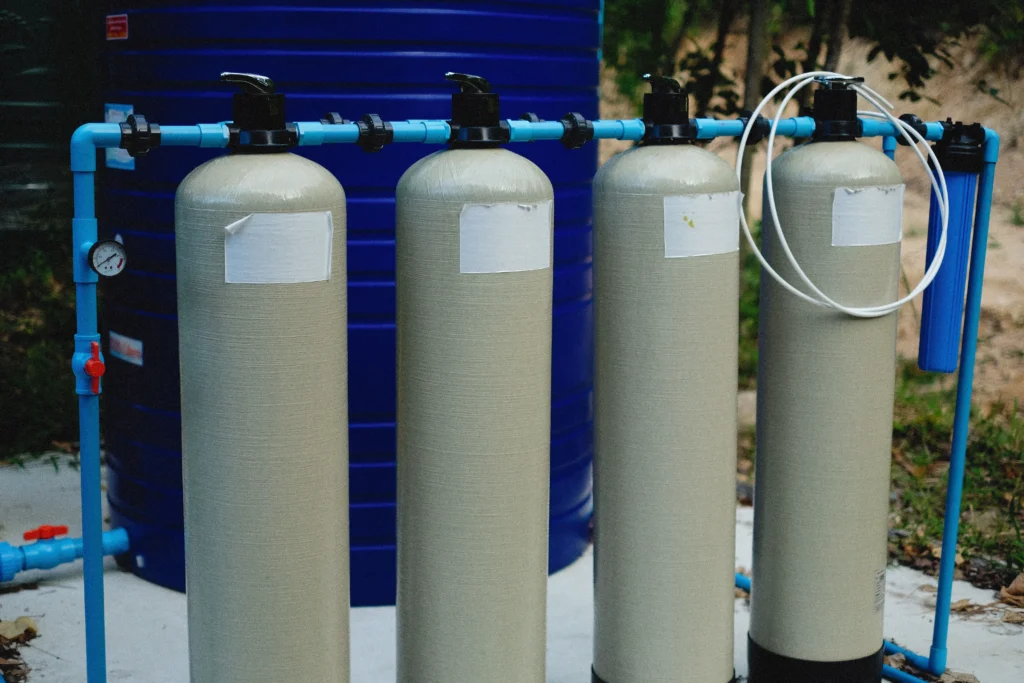
Water is one of the most critical inputs for industry and commercial operations, but it is often the most overlooked. Every facility, whether it is a manufacturing unit, an infrastructure project, a hotel, a hospital or an institution, needs a steady supply of water that meets certain quality standards. This is why a well-designed water treatment system is so vital — not only for regulatory compliance but for the day-to-day reliability of industrial processes. Companies seeking reliable Water Treatment Plants in Kolkata are increasingly discovering that water treatment is not a one-time installation but an ongoing operational activity that directly influences product quality, equipment life and process consistency. What Is a Water Treatment Plant and Why Do Industries Need One? A water treatment plant is a system designed to remove impurities, contaminants, and unwanted chemical or biological elements from water so that it is suitable for a specific industrial, commercial or institutional use. Raw water, be it from municipal sources, borewells, rivers or recycled streams, is seldom pure enough or chemically balanced for sensitive industrial applications. Industries need systematic water treatment due to the following reasons:  Raw water often contains organic matter, dissolved salts, suspended solids and microorganisms Process water needs vary greatly by industry (boiler feed, cooling towers, product formulation, cleaning) Environmental regulations typically require treatment of wastewater before discharge or reuse. Inconsistent water quality can lead to machinery damage, decreased product consistency and more downtime If not treated in a structured manner, industries risk scaling in boilers, corrosion in pipelines, fouling in heat exchangers and quality deviations in production batches. Why is Processing Raw, Process and Wastewater Important Different stages of water use in an industrial plant require different treatment approaches. Treatment of raw water Raw water treatment usually includes removing suspended particles, turbidity, hardness and microbial contamination before the water enters the main process line. This protects downstream equipment and provides a stable starting point for further treatment. Water Treatment Process Process water often needs to meet very specific chemical parameters – low conductivity for boiler feed, controlled pH for pharmaceutical or food processing, or specific limits for hardness in textile dyeing. An industrial water treatment plant is tailored to these application-specific needs. Treatment of Wastewater Wastewater from manufacturing, washing or process discharges is usually contaminated with materials that may not be discharged directly to water bodies or municipal systems. The water can then be treated and safely discharged, or increasingly reused within the facility – reducing overall freshwater dependency. How Industrial Water Treatment Facilities Improve Water Quality and Operations A well-engineered industrial water treatment plant benefits operations in many practical ways Minimizes scaling, corrosion and fouling in pipes, boilers and cooling systems to reduce equipment wear Improves process consistency by delivering water with uniform chemical and physical properties Enables regulatory compliance for discharge and reuse standards Enables water recycling, which can reduce dependence on external water sources Protects product quality in industries such as food processing, pharmaceuticals, and textiles where water is in direct contact with the product For example, a beverage manufacturing unit may require tightly controlled mineral content in water while a hospital may need microbial removal for sterile applications. Different treatment setups are required for each use case. Commercial and Industrial Water Treatment Systems A single treatment technology cannot be used for every application. Facilities usually depend on a combination of the following: Filtration Systems Multi-media and sand filters are used in the primary treatment step to remove suspended solids and turbidity. Softening Systems. Water softeners based on ion-exchange remove hardness and thus protect boilers and heat exchangers from scaling. Reverse Osmosis (RO) Systems RO systems remove dissolved salts and contaminants resulting in high purity water for sensitive industrial and process applications. Ultrafiltration (UF) Systems UF systems are used to remove bacteria, suspended particles and colloidal matter, often as a pre-treatment stage. Deionization (DI) Systems DI systems are used in areas where almost complete removal of ionic impurities is necessary, for example, in the electronics industry or in laboratories. Effluent Treatment Plants (ETPs) and Sewage Treatment Plants (STPs) These systems treat industrial or domestic wastewater before discharge or reuse to help facilities meet environmental compliance requirements. A commercial water treatment plant for a hotel or an institutional building will have a combination of filtration, softening and disinfection. A manufacturing unit may need a more elaborate industrial water purification plant with RO, UF and DI stages together. Key Things to Note When Selecting a Water Treatment Plant There is no “one size fits all” configuration for water treatment systems, and selecting the right one depends on a number of technical and operational considerations. Capacity for Treatment The system should be sized based on the daily water demand, peak flow requirements, and future expansion plans. Source Water Quality The choice of necessary treatment stages depends on the characteristics of the raw water such as hardness, turbidity, microbial load and total dissolved solids. Water Chemical Composition Parameters like pH, alkalinity, and mineral composition affect equipment selection and long-term performance of the system. End Use Requirements Water used for boiler feed, product formulation, cooling towers, or sanitation all have different quality standards that the system should be designed to meet. Why Customized Water Treatment Plants Are Important No two manufacturing facilities share the same water profile or operational requirements. A customized water treatment plant allows businesses to treat their specific combination of raw water quality, production needs, space constraints and regulatory requirements. Customization may include Changing of treatment stages with seasonal raw water variation Development of modular systems for space-limited installation rooms Capacity planning for phased plant expansion Development of recycling loops for water-scarce areas This is where working with an experienced water treatment plant manufacturer comes into its own as standard packages often cannot cater for variability seen across industrial sites. Water Treatment Equipment: How It Works Together As An Integrated System The individual components like filters, softeners, RO membranes, dosing systems and disinfection units do not function in isolation. They are designed to work

water treatment plant
Water Treatment Plant

What Does a Customized Water Treatment Plant Cost in Kolkata? 

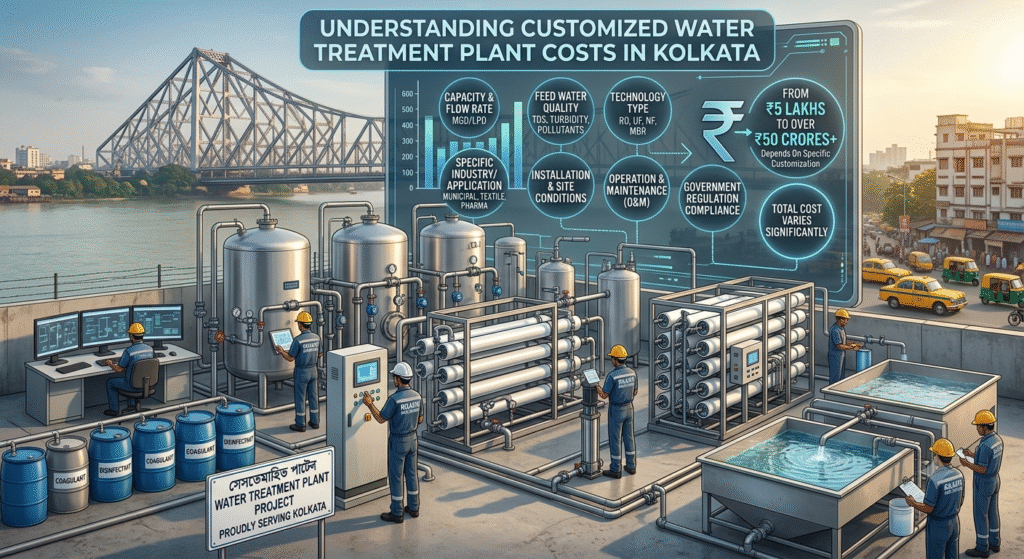
If you have started looking for a customized water treatment plant in Kolkata, you might have noticed something frustrating already: hardly anyone gives you a straight number. Ask three vendors the same question and you will get three very different answers, often for the same stated capacity. This is not evasiveness on the part of vendors – it is because a water treatment plant is not a single standardized product like a water purifier you buy off a shelf. It’s an engineered system and it costs what it costs for your water, your process, your site. In this article, we take you through the reasons why capacity alone can never be the basis for a true cost of a customized plant, what actually impacts the price up or down, and how to think about cost in a way that protects your business throughout the plant’s entire working life, not just on day one.  Why Capacity Alone Doesn’t Determine Cost It is natural to think in terms of flow rates – ‘I need a 10,000 liters per hour plant’ or ‘we need to treat 50 KLD of effluent’. Capacity is certainly one input into the cost equation, but it provides a vendor with almost no information about what equipment, materials or design will be required. Two plants of the same capacity in Kolkata can be 30–100% or more different, because capacity only tells you “how much water?” It has no reply: How polluted or hard is the water to begin with?  What standard of treatment is required for the water – drinking water standards, boiler feed  quality, process water quality, or a discharge/reuse standard?  How many steps of treatment does it take to get there?  Where does the water come from? Is the quality different from season to season?  What are the civil, electrical and space constraints at the installation site? For example, two businesses in Kolkata needing the same volume of output could require radically different treatment trains, one relatively simple and the other needing iron removal, arsenic treatment or extensive pre-treatment before even reaching the core purification stage. That is why serious water treatment providers require a raw water analysis and a clear understanding of end-use requirements before quoting anything meaningful. Capacity determines the size of the equipment; all other factors determine the actual design and price.   Major Factors That Influence the Cost of a Customized Water Treatment Plant 1. Raw Water Quality This is typically the single biggest cost driver. Kolkata and the wider West Bengal region source water from a variety of sources – municipal (largely Hooghly-river based) supply, groundwater/borewells and in some industrial cases, surface water bodies. High levels of iron, manganese, hardness, turbidity or in some pockets arsenic and fluoride are known to be present in ground water in several parts of the region. Water that has a high total dissolved solids (TDS) content, high organic load, high turbidity or biological contamination needs additional pretreatment stages — sediment filtration, iron removal, activated carbon, chemical dosing or clarification — before it can even enter a primary treatment stage such as RO or softening. Raw water of lower quality almost always requires more equipment, more chemicals and a higher price.  Required Treatment Process The treatment technology needed – multimedia filtration, softening, ultrafiltration (UF), reverse osmosis (RO), demineralization (DM), or a combination of these – depends on the intended use of the treated water. Plants producing water for general washing or utility use require far less than those producing high purity boiler feed water or pharmaceutical grade process water. Not just volume but purity target. The complexity and cost scale directly with purity. 3. Plant Capacity Of course, capacity still counts: more throughput generally means bigger vessels, pumps, membranes and piping. That adds cost. But as explained above, it is a multiplier on the design, not the design itself. The same capacity can have very different cost bases depending on all the other items on this list. 4. Source of Water The pretreatment burden can vary significantly with the feed, including municipal supply, borewell/groundwater, river or pond water, or recycled/reused water. Surface waters generally need more extensive clarification and disinfection because of their variable turbidity and biological load; groundwater needs to be treated for whatever minerals or contaminants are locally present. 5. Treatment Stage Figures A single stage filtration system is much cheaper than a multi-stage train of pretreatment, primary treatment, polishing and disinfection. Each stage adds its own vessels, media, membranes, controls, piping and footprint – all of which add cost but also add reliability and consistency of output when the raw water is difficult or the end use quality demands are strict. 6. Selection of Equipment Within any treatment stage there is a wide range of equipment quality and brand available – pumps, membranes, valves, instrumentation and vessel materials (mild steel vs FRP vs stainless steel for instance) all come at different price points. Higher grade components will generally cost more money up front, but will generally last longer, break down less often and perform more consistently – an important trade-off to weigh rather than dismiss. 7. Automatization Level Plants range from fully manual operation to semi-automated to fully automated with PLC based controls, remote monitoring and automatic backwash/ flushing cycles. Automation does increase the initial cost of the project but reduces the dependence on manpower, reduces human error and often improves the consistency of the treated water quality over time – a factor that matters a great deal for industries with strict compliance needs. 8. Civil Works The civil work required (foundations, plant room construction, tank platforms, sumps, structural support for equipment) is very dependent on the existing site condition. A greenfield site, with no civil infrastructure in place, will require significantly more civil investment than an existing facility being retrofitted with a treatment plant. 9. Installation Requirements   Factors influencing installation complexity include where a plant will physically sit in a building (roof, basement, ground floor or a dedicated utility building) and how

Customized vs Standard Water Treatment Plants
Water Treatment Plant

Customized vs Standard Water Treatment Plants: Which Is Better for Kolkata Businesses? 

All water intensive businesses – be it a manufacturing unit, a hotel, a hospital or a commercial complex – ultimately face the same question – do we install a standard, off-the-shelf treatment system, or do we invest in a Customized Water Treatment Plant in Kolkata, built around our specific water source and process needs? There’s no one size fits all answer. The right choice depends on your raw water quality, the daily water demand, available space, budget, and the actual use of the treated water. This guide simplifies both approaches so that the businesses of Kolkata can make an informed and practical choice.  How the Two Ways Work 1.What is a standard water treatment plant (packaged)? A standard or packaged treatment plant is a system that is pre-engineered to fixed specifications—usually a fixed flow rate, a common filtration sequence (such as sand filtration, activated carbon, and basic disinfection), and standardized components. These systems are manufactured in large quantities and designed to deal with “typical” water conditions, not the raw water profile of a particular site. 2.What’s a Custom Water Treatment System? A Customized Water Treatment Plant in Kolkata is designed based on the evaluation of the actual raw water source – borewell, municipal supply, river or effluent, contaminant load, seasonal variation and the intended water use of the business. The treatment train (filtration, softening, RO, UF, disinfection or ETP/STP integration) is selected and sized for the site, not fitted to a generic template.  Key Differences Between Custom and Standard Systems 1. Flexibility of Design Standard plants are not very flexible . You choose from a handful of pre-set models that are closest to your requirement . Custom plants are designed based on your particular water chemistry, allowing you to select treatment stages, media and dosing systems with precision. 2. Capacity for Treatment Packaged units are in fixed capacity slabs (say 500 LPH, 1000 LPH, 2000 LPH) which could leave a business over-paying for unused capacity or under-provisioned in peak demand. A custom system is sized to the actual daily consumption pattern, including the peak-hour loads. 3. Standard for water quality If the raw water has some unusual contaminants such as high iron, fluoride, hardness, industrial effluents or biological load common in parts of Kolkata and the surrounding Gangetic belt, standard systems may not be able to adequately treat the water. Tailored plants include particular pre-treatment or polishing steps to meet the precise water quality targets needed for drinking, process  or discharge use. 4. Footprint and Space Limitations The standard units come in fixed sizes, which might not be suitable for businesses located in crowded commercial areas, basements or old buildings with irregular layouts in Kolkata. Customized plants can be designed in modular, vertical, or compact configurations to accommodate constrained sites. 5. Problems with Installation  Packaged plants usually take less time to install, as they are mostly pre-assembled. Customized plants require more intensive site preparation, piping design and civil work, so it takes more time, but the result is a system that fits in properly with the existing infrastructure.  6. Conditions of Operation  Standard systems are easier to operate, as the processes are fixed and well documented. Customized systems are more adapted to the water source but can require better trained operators especially in case of multiple treatment steps or automation .  7. Maintenance  The standard maintenance schedule for a typical plant is generic and may not consider the site-specific fouling or scaling patterns, which sometimes may lead to more frequent breakdowns. Customized plants can have maintenance protocols that are specific to the actual contaminant load, which can result in fewer unplanned downtimes over time.  8. Skalierbar  Here the two approaches differ quite a lot. Scaling standard plants is more difficult. Increasing capacity usually requires a complete replacement of the unit. Customized plants in general can be designed with a view to the future and capacity can be added in phases as the business grows.  9. Customization Options  Standard systems have little or no customization beyond basic accessories. Plants can be designed to your exact requirements in terms of level of automation, remote monitoring, energy efficiency features, chemical dosing accuracy and integration with existing plumbing or effluent treatment systems.  10. Suitability to the project as a whole  Standard plants are suitable for companies with simple, predictable water quality and small and steady demand – such as small offices, retail outlets or stand-alone residential-commercial buildings. Tailored plant solutions are well-suited for companies with variable or complex water sources, large or growing demand, regulatory compliance requirements, or long-term growth plans.  Things to Consider Before Choosing Kolkata Businesses  Here are some things to think about before you settle on a standard system or a Customized Water Treatment Plant in Kolkata:  Water source: Different water sources – municipal supply, borewell, surface water or recycled/effluent water – have different risks of contamination and treatment needs.  Contaminants profile Iron, hardness, turbidity, TDS, fluoride and microbial load varies widely in different parts of the city and industrial belts.   Daily water demand: Map average and peak usage, not just general estimates  Intended use of water The quality criteria and regulatory requirements for drinking water, process water, boiler feed water, cooling water and discharge water vary.   Treatment goals: > The design of the system will differ depending on whether the objective is to meet pollution control regulations, product quality standards or simply to provide potable water.   Space and site conditions: The available footprint, headroom and civil infrastructure will determine whether a packaged or modular customized design is more practical.  Budget and Schedule. Standard systems are typically less costly and quicker to implement but custom systems can be more costly initially but may help remove operational inefficiencies later. Making DecisionsSome Practical Advice  Test your raw water first. Any decision taken without proper water analysis report is guess work not engineering choice.   Track average and peak demand, not just monthly average. Undersizing a system is a common and expensive mistake.   Look 3-5 years down the road.

Customized Water Treatment Plants
Water Treatment Plant

Customized Water Treatment Plants for Industries in Kolkata: What You Need to Know 

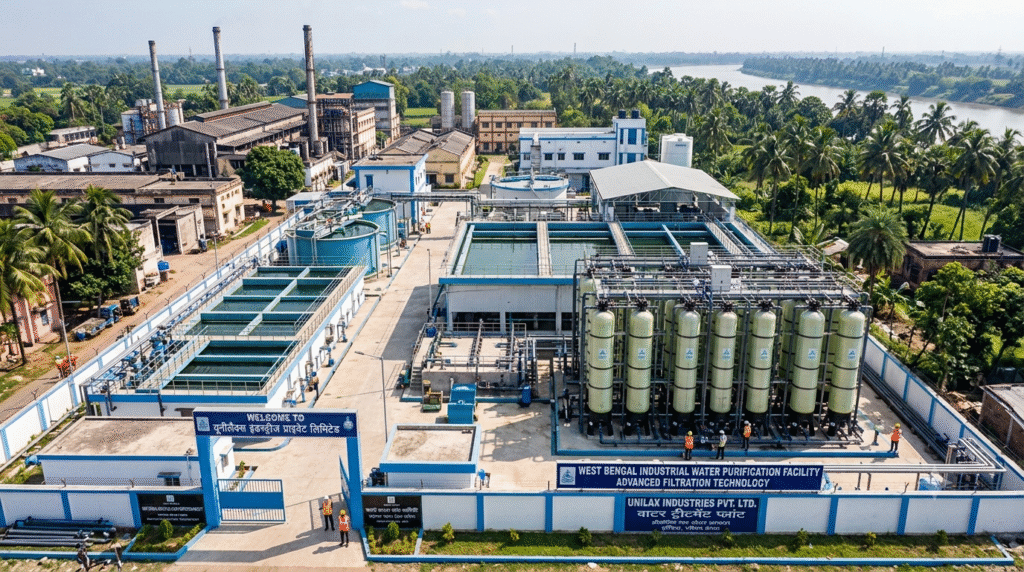
Water is essential for industries in Kolkata and the wider West Bengal region, used for everything from cooling and cleaning to processing raw materials and generating steam. But water use is unique to each industrial plant, so a bespoke water treatmet plant in Kolkata is often a more feasible starting point than a generic off-the-shelf system. In this article, we walk through the reasons for the diversity in industrial water treatment needs, the key treatment stages that are worth understanding, and how a tailored plant design can help a facility run more efficiently, reliably and sustainably over time.  Why “One Size Fits All” Doesn’t Work for Industrial Water Treatment It’s easy to assume a water treatment plant is a water treatment plant — that what works for one factory will work for another. That is rarely the case in practice. The requirements for industrial water treatment are dependent on a number of variables which vary from site to site: 1. Industry Category A textile dyeing unit, a pharmaceutical formulation plant, a food and beverage facility and a steel or engineering unit all behave very differently with water. Some industries require ultra-pure water for their processes, while others are mainly concerned with treatment and safe disposal of wastewater generated during production. 2. Water Supply The type and level of treatment required depends on whether the facility draws water from municipal supply, ground water (borewells), surface water or a combination of sources. Different pockets of ground water may have different mineral or contaminant profiles Municipality supply may be more or less consistent depending on area and season  3. Existing Contaminants Suspended solids, hardness-causing minerals, dissolved salts, organic matter, oil and grease, heavy metals or chemical residues specific to the industry may be present in raw water and wastewater streams. The treatment technologies needed depend on the type and concentration of these contaminants.  4.Production Process The quality standard of water before use and the nature of the effluent generated afterward depend on how water is used within the process, as a raw material input, a cooling medium, a cleaning agent, or a carrier for chemicals. 5. Water Volumes Consumed A small manufacturing unit and a large processing plant will require very different flow rates and capacities. Proper sizing of a plant (not oversized or under-sized) is important for cost efficiency and reliable operation. 6. Discharge Requirements The standard of treatment needed may differ depending on where the treated wastewater is discharged (municipal sewer, water body) or reused on site. Facilities located in and around Kolkata and West Bengal should determine the discharge requirements that are applicable to their specific location and industry category during the plant design process. These may differ according to the jurisdiction and the use case. The lesson: these variables are interrelated, which is the reason a proper water and wastewater characteristics assessment should always precede finalizing a plant design — not after. Important Phases of Treatment to Know  The specific combination and sequence of technologies utilized is entirely site-assessment dependent, but most industrial water treatment plants are constructed from some combination of the following stages. Pre-treatment Pretreatment is usually the first step and is used to protect downstream equipment. This could be the removal of larger solids, oil separation, pH adjustment, or chemical dosing to prepare the water for more sensitive treatment processes. Filtering Filtration removes turbidity and suspended solids. This can be simple sand and multimedia filtration, to finer micron-level cartridge or membrane filtration, depending on the application and based on the particle size and load in the water. Relaxing Over time, hard water, which has a high calcium and magnesium content, can cause scaling in boilers, cooling towers, and pipelines. Where hardness is a risk to equipment or process quality, softening systems, usually ion exchange, are employed. Reverse osmosis (R.O.) RO systems remove dissolved salts and impurities on a standard molecular scale, leaving high purity water. Industries with strict process water quality standards, such as pharmaceuticals, food and beverage, and some manufacturing processes, or those requiring boiler feed water to meet specific purity levels often require this.  Waste Water Treatment Production effluent often needs treatment before discharge or reuse. Depending on the nature of the effluent, this may involve a combination of physical, chemical and biological treatment processes, such as biological treatment for wastewater with a heavy organic load, or physico-chemical treatment of effluents containing suspended solids and certain chemicals.  Why the Right Configuration Should Be Assessed, Not Assumed  It is easy to assume that a treatment plant configuration that has worked for one industry will automatically work for another, even in the same broad sector, but that is a mistake. For instance, effluent characteristics of two textile units may differ significantly depending on the dyes and chemicals used, the volumes of production and the existing infrastructure. A more dependable approach is: 1.Water source and quality testing – what is actually in the raw water and wastewater streams. 2.Defining treatment goals — Is the goal potable-grade water, process-grade water, safe discharge, or water reuse (or some combination)? 3.Understanding production patterns, whether continuous or batch, peak demand periods, and seasonal variation in usage. 4.Site restrictions — space available, utilities on the site, and plans for future expansion. 5.Regulatory & discharge considerations – specific to location and industry category. This is how Unilax deals with industrial clients – looking at the specific water characteristics and needs of the site and then designing a plant configuration around that, rather than proposing a standard package regardless of what the assessment shows.  Advantages of a Custom Water Treatment Plant There are several practical advantages to designing a plant to the specific needs of the facility, not merely adapting a generic template: Right-Sized Capacity Designing the plant on actual and projected water use avoids the inefficiencies of an oversized system (higher capital cost and wasted space) or an undersized system (frequent strain and inadequate treatment during peak loads). Space Saving Within and around the industrial belts of Kolkata, industrial land and floor

Custom Water Treatment Plant
Water Treatment Plant

Why Choose a Customized Water Treatment Plant Kolkata for Your Industry?

Water is associated with each industry in different ways. The way a textile unit, a pharmaceutical facility, a food processing plant and a chemical manufacturer use water is different, so is the way they pollute it. This is precisely why a universal system of purification rarely works in practice. Installing a Customized Water Treatment Plant Kolkata businesses can trust is one of the smartest long-term decisions you can take if you run an industrial operation in West Bengal – for compliance, cost control, and sustainability. In this blog we break down what makes customized water treatment systems different, and why they are fast becoming the preferred choice for industries across Kolkata. What Is a Customized Water Treatment Plant?​ Your water source, contamination profile, production scale and discharge requirements are unique, so we build a water treatment plant around them – not a generic template. Our engineers will evaluate the quality of your raw water (borewell, municipal or river) and the process water requirements and effluent discharge standards of your industry to design a system most suitable for your site. This is different than off-the-shelf treatment units that are designed for average conditions and often underperform or overspend on chemicals and maintenance when real-world water quality does not match assumptions. What Is a Customized Water Treatment Plant?​ Kolkata’s industrial landscape is diverse — spanning leather processing, jute mills, pharmaceuticals, food and beverage units, engineering workshops, and more. Several local factors make customization especially important here: Variable groundwater and surface water quality— Kolkata’s water sources often carry high levels of iron, turbidity, and organic matter, particularly during monsoon season. Strict effluent discharge norms set by the West Bengal Pollution Control Board (WBPCB), which vary by industry category. Space constraints in older industrial zones, requiring compact, efficient plant layouts. Fluctuating production loads, especially in seasonal industries like food processing, which demand scalable treatment capacity. A generic plant simply can’t account for all these variables at once — but a customized system can. Key Benefits of a Customized Water Treatment Plant 1. Enhanced Operational Effectiveness When a treatment system is designed around your actual water chemistry and flow rate, it will be running closer to its optimum design point most of the time. This means fewer breakdowns, more consistent output quality and less manual intervention from your operations team. 2. Reduce Long-Term Costs Although a custom plant may have a somewhat higher initial design cost, it pays dividends in: Reduced chemical dosing (as treatment is calibrated, not over-engineered) Reduced energy consumption Fewer spare parts and less unscheduled downtime Longer equipment life thanks to less scaling and fouling 3. Simplified Regulatory Compliance Industries in and around Kolkata are required to meet certain effluent standards before discharge or reuse. A tailored plant is built from day one to meet these precise specifications, mitigating the risk of penalties, plant shutdowns or notices of non-compliance. 4. Scalability for Expanding Operations As your production scales, so do your water treatment needs. Custom systems are usually designed to be modularly expandable so you can add capacity without redesigning the whole plant. 5. Improved Water Reuse and Sustainability As water costs rise and ESG expectations increase, many industries are investing in treatment systems that enable recycling — for cooling towers, boiler feed, or process reuse. A tailor-made design greatly facilitates the effective integration of reuse loops. Industries Most Benefited API & Pharmaceutical Manufacturing Textile and Dyeing Plants Food & Beverage Processing Leather and Tanning Industry Engineering and car repair shops Chemical and petrochemical plants Each of these sectors has their own contamination profiles – heavy metals, organic dyes, oils, biological load – which a tailor-made approach handles far more effectively than a generic system. Selecting the Appropriate Partner The success of a tailor made water treatment plant is very much dependent on the expertise behind the design and installation. Find a supplier who will conduct a water audit, is familiar with the local regulatory requirements and provides ongoing support, not just equipment. This is where Unilax has created a strong name in the industries of Kolkata – designing water treatment solutions that are engineered around the actual water conditions and production requirements of each client, instead of pushing standard packages. Working with a team who understands the specifics of a local industry from initial water testing to plant commissioning and after sales support helps ensure the system performs reliably from day one. Final Thoughts​ Water treatment is not a one-time purchase, but an operational backbone for any water intensive industry. Choosing a Custom Water Treatment Plant Kolkata operations can mean increased efficiency, reduced costs over time, and assurance that your plant will meet both regulations and expansion. If your existing system is not delivering as expected or you are installing a new facility, it is worthwhile to have a proper water audit carried out prior to selecting the treatment approach. In the long run, a plant designed to meet your true needs almost always proves to be the more economical choice.

Scroll to Top