unilax

RO Plant

Mineral Water and Packaged Drinking Water Plant
RO Plant

How to Set Up a Mineral Water and Packaged Drinking Water Plant

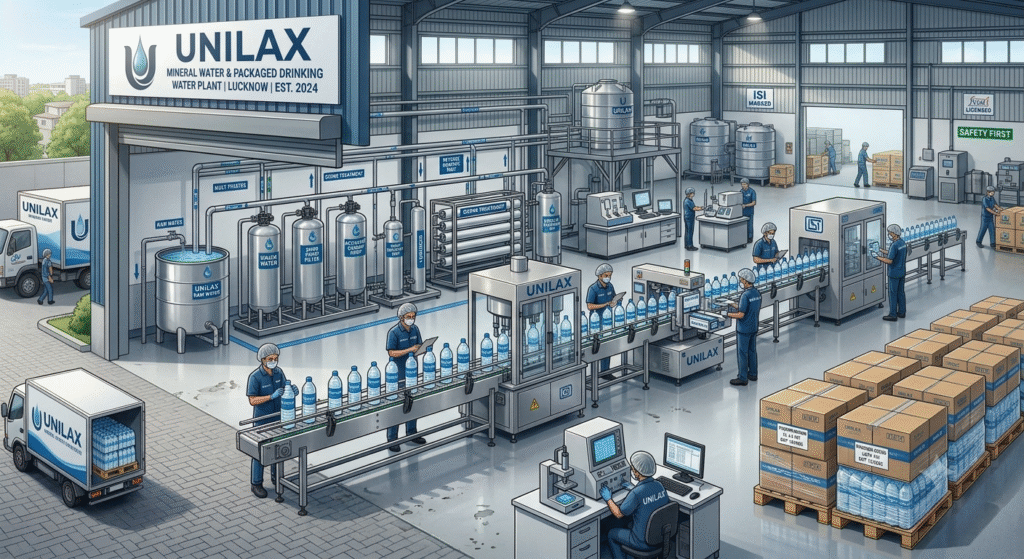
Demand for safe packaged drinking water is rising in homes, offices, hotels, hospitals and events. This makes packaged drinking water plant an attractive project for entrepreneurs and manufacturers. But a successful plant is the result of careful planning from water source evaluation to equipment selection to regulatory checks. This guide sets out the practical steps. What is Packaged Drinking Water Plant? A packaged drinking water plant uses raw water from borewell, municipal supply or other sources. It treats the water to get rid of impurities and microorganisms, and fills, seals, labels and packs it for distribution. A mineral water processing plant can also add controlled mineral content to improve taste and consistency. Depending on the market it serves, the facility can produce bottles, jars, pouches or cups. The Basic Production Steps The sequence of operations followed by most bottled water plants is similar: Raw water procurement and storage Pre-treatment and filtering of purification, often by reverse osmosis (RO) If desirable, addition of minerals Disinfection Treated water storage Washing, Filling & Capping Bottles Labeling batch coding and packing Quality check and shipping The effect of each stage on the next must be considered so that the plant is designed as a connected system rather than a number of separate machines. Priority of Raw Water Testing Have your raw water tested by a qualified laboratory before buying any equipment. Water quality varies widely from place to place, and the results shape the entire treatment design.” A typical analysis includes: Total dissolved solids (TDS) Iron, manganese and hardness Turbidity and color Sulfates, nitrates and chlorides Microbiological contamination Any area-specific contaminants For example a borewell with high iron needs to be oxidized and iron removed before RO. A source with moderate TDS and low turbidity may require a simpler pretreatment train. This is one of the most expensive mistakes a new plant owner can make. RO and other purification technologies RO mineral water plants are common due to reverse osmosis’s ability to remove dissolved salts and many other impurities. But RO does not work by itself. It requires well treated feedwater. Otherwise, its membranes will foul or scale easily. Other technologies are often used in conjunction with RO depending on the raw water and the product: Ultrafiltration (UF): remove suspended particles and some microorganisms. Activated carbon filtration removes odor, chlorine and organic compounds. Softening: Controls hardness which can scale RO membranes. Disinfection: UV treatment or ozonation The right blend is dictated by the product you are trying to sell and the test results. Stages of Filtration, Disinfection, Storage and Treatment Water processing usually includes the following steps: Pre-filtration: removal of suspended solids, turbidity by sand and multimedia filters. Adsorption: chlorine and organic matter are removed with activated carbon filters. Polishing: micron cartridge filters protect downstream membranes. Purification: Dissolved and microbial contaminants are reduced by RO or UF. Mineral dosing: If the product is sold as such, then controlled mineral addition is used. Disinfection: ozone, UV or both prior to filling. Storage: hygienic, food-grade tanks are used for storage of treated water. Storage is a consideration. Poor tank design, long holding times and contaminated pipework can compromise even well treated water. What is in the machinery of the mineral water plant Generally mineral water plant machinery include the treatment section, and the packaging section. Typical items include Raw water tanks and feed pumps Carbon and multimedia filters Cartridge filters and softners RO and UF units Mineral dosing units Ozonators & UV Sterilizers Water storage tanks (treated) Filling, rinsing and capping machines Labeling, coding and shrink wrapping machines Routine testing laboratory instruments UNILAX WATER is one of the companies that offer water treatment systems and mineral water plant solutions. Buyers can compare configurations and see Mineral Water Plant Machinery options from UNILAX WATER and other suppliers. Machinery Selection by Capacity and Operations The choice of mineral water plant equipment is not about buying the biggest system you can afford. It’s about matching machinery to your production capacity, your product mix, your labor availability and your growth plans. A small plant selling to a local market may use semi-automatic filling and manual packing. A larger facility serving distributors may require automated rinsing, filling and capping lines. Sales are limited if the equipment is undersized and capital is tied up and it may run inefficiently at low loads if it is oversized. How a Bottling Plant Combines Treatment and Filling A mineral water bottling plant works best when treatment and packaging are in balance. The treatment section needs to supply the water at such a flow rate that the filling line can work continuously and the treated-water tank serves as a buffer between the two. For example, if your filler runs at 2,000 bottles per hour, your RO output, storage volume and disinfection capacity must meet that demand, including allowance for RO reject water and cleaning cycles. They lead to idle machines, bottlenecks, or water held too long before filling. Important Factors to Setup Mineral Water Factory To start a mineral water factory is not just machinery. Next plan for: Space: different areas for raw water, treatment, filling, packaging, storage and the laboratory Production flow one way system to reduce cross contamination and handling Utilities: dependable power, backup power, water, drainage, compressed air if necessary Reject water management: RO generates reject water that requires a proper use or disposal plan Building design: floors, walls, ventilation and pest control, easy to clean. Raw Material Storage: Clean areas for bottles, caps, labels and cartons Regulatory Requirements Bottled drinking water is a regulated commodity. Before setting up a plant, the latest applicable BIS, FSSAI, environmental, local and other requirements should be checked with the concerned authorities. These rules can change and requirements can vary by state, type of product and plant size. But buying the right equipment is no guaranty of approval. The plant owner is still responsible for licensing, laboratory tests, documentation and inspections. Getting the Right Capacity To estimate the packaged drinking water plant capacity, consider the following:
Water Treatment Plants
RO Plant

How RO and Water Purification Systems Improve Water Quality for Industrial Applications

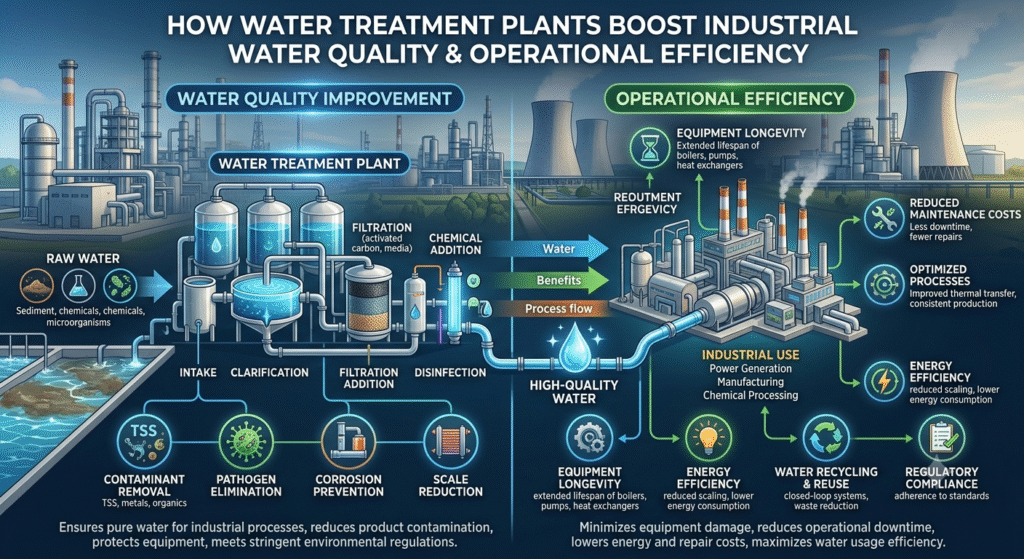
Water is a raw material, a cleaning agent, a coolant and an ingredient. And where quality is inconsistent, effects include scaling in boilers, fouled heat exchangers, off-spec products, failed audits and increased maintenance costs; An effectively designed Water Purification Plant helps organizations manage these risks by offering water treatment to a desired level appropriate for its intended use. This article explains the working principle of reverse osmosis (RO) and similar technologies, the interaction between the individual treatment stages and what decision makers should consider when investing in a system. What is water treatment plant? A water purification plant is a system that is designed to combine several processes to reduce contaminants in raw water. Depending on the design it can remove suspended solids, dissolved salts, hardness, organic matter, chlorine, micro-organisms and other impurities. How it works and how it is different from simple water filtration Since particles are the main thing a water filtration plant pulls out. Sand filters, cartridge filters and the like trap sediment and turbidity. That is helpful but filtration alone will not remove dissolved salts, dissolved minerals or many chemical contaminants. A purification plant goes a step further, mixing physical, chemical and membrane-based processes. In practice , filtration is often one stage inside a larger purification system rather than a separate alternative . Why Water Quality Standards Vary Very different water is needed by different users Residential: Water is typically treated for taste, odor and rudimentary safety. Commercial (Hotels, Hospitals, Institutions) : The demands are more stringent. Boilers, laundry equipment, hotels, they worry about scaling. In hospitals, reliable quality is needed in sterilization areas and clinical support. Industrial: Requirements are typically process-defined. Each of these applications, boiler feed water, cooling towers, food & beverage production and pharmaceutical manufacturing, has limits on hardness, conductivity, silica, microbial load and other parameters. Therefore, no one design is suitable for all sites, and the treatment train needs to be matched to the application. How Reverse Osmosis Works Reverse osmosis uses pressure and a semi permeable membrane. The feed water is pumped to a pressure higher than its osmotic pressure. Water molecules are forced through the membrane, rejecting most of the dissolved salts, organics and other impurities. The system produces two streams: Permeate: the water with low dissolved solids. Reject stream: the stream that carries the rejected contaminants out of the system. What Makes RO So Popular RO is popular in industrial applications for a number of reasons: It cuts down a wide variety of dissolved pollutants at the same time. It operates 24/7 and can be scaled up or down in capacity. It generally uses fewer chemicals than older demineralization techniques such as ion exchange. It can be a first step before polishing steps such as deionization for higher-purity needs. Thus RO water treatment plant has become integral to many industrial and commercial setups. Pre-Treatment Role Before a RO Plant RO membranes are fragile. Suspended solids, iron, chlorine, hardness and organic matter can foul, scale or chemically damage them. Pre-treatment is important to protect the membranes and achieve stable performance. Pretreatment is typically done in the following steps: Multimedia or sand filtration to reduce suspended solids and turbidity. Filtration on activated carbon to eliminate chlorine and organic compounds that can damage the membranes. Hardness and scale mitigation via softening or anti-scalant dosing. Removal of iron and manganese if they are present in ground water. Cartridge filtration last line of defense before high pressure pump. Skipping or under-sizing pre-treatment is one of the most common reasons that RO systems underperform. How Filtration Removes Unwanted Contaminants Industrial water filtration addresses the physical side of water quality. Depending on media and rating filters can eliminate: Sand, silt and sediment Suspended Solids & Turbidity Iron & Rust Particles Some organic compounds (by activated carbon) and chlorine Micron-rated cartridge or filter (fine particles) Take a plant that is drawing water from a high sediment borewell. Multimedia filtration is often the first line of defense. It protects the downstream equipment and reduces the load on the RO stage. Typical stages of an industrial water purification system are: Designs vary but a typical industrial water purification system might include: Raw water storage and equalization — Permits stabilization of flow and feed conditions. Coagulation or chemical dosing (if required) assists in the removal of fine suspended matter. Multi media filtration: Removes suspended solids and turbidity. Activated carbon filtration: Removal of organics, chlorine. Softening or antiscalant dosing: manages hardness & scale risk. Cartridge filtration protects the membranes and the pump. Reverse Osmosis – for removing dissolved salts and other impurities. Post-treatment: pH adjustment, deionization, UV disinfection, or other polishing steps as required by the application Storage and distribution of treated water: supplies water to the point of use. Not every plant needs them all. Design should be based on water analysis and end-use. RO Plant & Filtration Plant or both? Companies often ask what tech they really need. Here are some questions to guide us: What is the issue: turbidity, sediment or visible particles? A filtration plant might do the trick. Is the problem dissolved salts, high TDS, hardness or conductivity? Probably a RO plant with appropriate pre-treatment would be required. Are there any dissolved particles or contaminants? Usually the practical answer is a combination. First filtration then RO. Does the process require very high purity? RO can be followed by polishing technologies For example a hotel with hard borewater may need softening and filtration for laundry and boilers whereas a pharmaceutical unit needs multi-stage pre-treatment, RO and further polishing. The same name of a technology can be used for very different designs of systems. How to Choose a RO Water Treatment Plant Start with Water Testing and Analysis To design on the assumption that … is a dangerous thing to do. A water analysis should be done before selecting equipment. Parameters that are often looked at are: Conductivity & TDS Alkalinity and pH Hardness Turbidity and suspended solids Iron, manganese, silica Chlorides and other anions, sulfates Microbiological

RO Plant in Kolkata
RO Plant

RO Plant Maintenance Checklist for Businesses

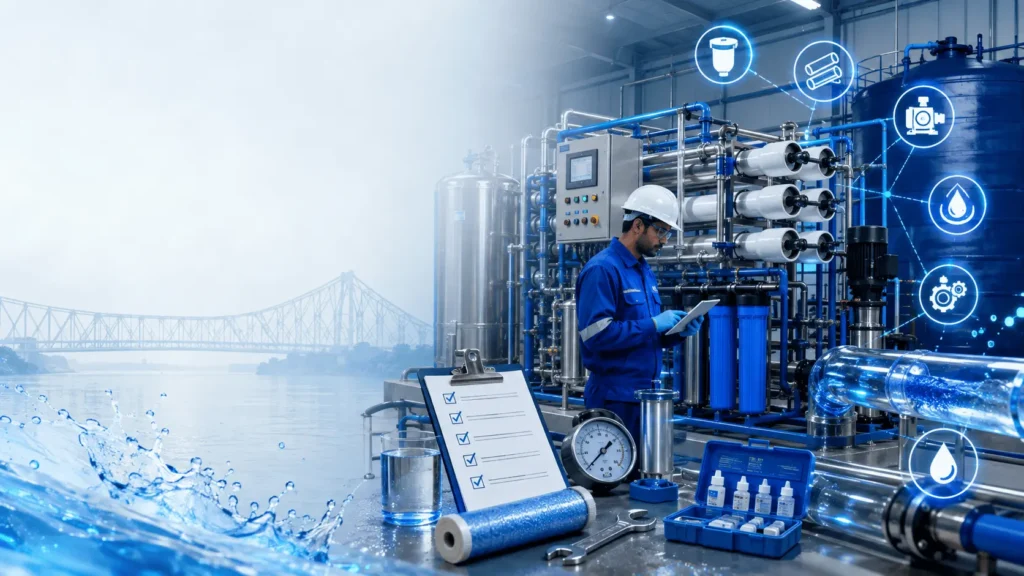
Companies that require a constant supply of water to run their daily operations need clean and purified water. If you are running a manufacturing unit, hotel, hospital, restaurant, school, pharmaceutical company or commercial facility, your RO Plant in Kolkata is a vital part in supplying safe and quality water. But a RO system alone is not sufficient. Regular maintenance is key to keeping the system working efficiently and to keeping the water quality consistent. If the Commercial RO Plant in Kolkata is not maintained properly, it can result in high electricity bills, low water production, membrane damage, poor water quality and unexpected breakdowns. Regular maintenance prolongs the life of the equipment and reduces repair costs and down time during operations. Kolkata Water Treatment Plant Investing in a water treatment plant in Kolkata and having a proper maintenance checklist will make sure that your system will work at its best for years to come. Why RO Plant Maintenance is Important Reverse Osmosis systems work to continually filter water removing dissolved salts, bacteria, heavy metals, sediments and other harmful contaminants. Filters get clogged, membranes scale up and pumps fail. Without regular maintenance on the system, the whole purification process will be less efficient. There are several benefits of proper maintenance: Consistent quality of purified water Increased RO plant efficiency Lower operating costs More membrane life Fewer repairs to pay for Less equipment downtime Better water collection Conformity with industrial and commercial water standards For the kolkata business, preventive maintenance is far less expensive than emergency repairs. Complete RO Plant Maintenance Checklist 1. Inspect the Pre-Filters Regularly Pre-filters remove dust, sand, rust and suspended particles before water enters the RO membrane. Look for: Accumulation of dirt Pressure loss Lower water flow Damaged filter elements Replace sediment filters as recommended by the manufacturer. 2. Monitor Water Quality Test the quality of purified water frequently using a TDS meter. Monitor: TDS level pH value Hardness Turbidity Microbial contamination Consistent testing helps identify problems before they become major failures. 3. Clean the RO Membranes Every Commercial RO Plant in Kolkata is equipped with RO membranes as its core. Their efficiency reduces with time due to mineral deposits and scaling. Clean the membrane on a schedule whenever: TDS increases Water  production decreases Pressure increases Fall in recovery rate Proper membrane cleaning greatly increases the lifetime of the system. 4. Check High-Pressure Pumps The high-pressure pump is responsible for pushing water through the RO membrane. Inspect regularly for: Leakage Unusual noise Vibration Pressure fluctuations Motor overheating Prompt servicing prevents costly pump failures. 5. Inspect Pipes and Fittings Leaks can reduce system efficiency and waste large amounts of water. Check: Pipe joints Valves Connections Pressure gauges Flexible hoses Repair leaks immediately to maintain optimal performance. 6. Replace Activated Carbon Filters Carbon filters remove chlorine, odor, and organic contaminants. Old carbon filters may: Reduce purification efficiency Damage RO membranes Affect water taste Timely replacement keeps the system running smoothly. 7. Sanitize the Entire RO System If storage tanks and pipelines are not cleaned, bacteria can grow in them. Sanitizing regularly helps: Keep It Clean Prevent bacteria multiplying Upgraded quality of drinking water Protect the users This step is especially important for hospitals, hotels, schools and food processing industries. 8. Monitor Pressure Readings The pressure gages give useful information about the working of a system. Look for: • Rapid pressure changes Overpressure Membrane clogging Pump problems Abnormal readings often signal latent maintenance problems. 9. Check Electrical Components Inspect: Control panel Wiring Sensors Solenoid valves Automation system A properly functioning electrical system ensures uninterrupted plant operation. 10. Schedule Professional Servicing Although daily inspections can be performed by staff, professional servicing should be scheduled periodically. A trusted Water Treatment Company in Kolkata can: Inspect every component Replace worn-out parts Optimize system settings Improve water recovery Reduce operating costs Prevent unexpected failures Professional Annual Maintenance Contracts (AMC) provide peace of mind and ensure consistent performance. Signs Your RO Plant Needs Immediate Maintenance Do not ignore these warning signs: Low water production High TDS reading Unpleasant taste or odor Increased electricity consumption Frequent equipment shutdowns Pump noise Water leakage Slow filtration Pressure fluctuations Membrane fouling Addressing these issues early can prevent expensive repairs. Tips to Increase the Life of Your RO Plant Follow these best practices: Replace filters on time. Monitor water quality every week. Keep the plant clean and dry. Avoid running the system without sufficient feed water. Maintain proper operating pressure. Schedule professional inspections. Use genuine spare parts. Keep maintenance records. Why Choose a Professional Water Treatment Company in Kolkata? Choosing an experienced Water Treatment Company in Kolkata ensures that your RO plant receives expert care and long-term support. A reliable service provider offers: Preventive maintenance Emergency breakdown support AMC services Genuine spare parts Membrane replacement Water quality testing Technical consultation System performance optimization Professional maintenance improves the efficiency and lifespan of your Commercial RO Plant in Kolkata. Frequently Asked Queations How frequently should a Commercial RO Plant be serviced? Most commercial RO plants should be serviced by a professional every 3-6 months depending on the usage and quality of the water . Why clean membranes? Cleaning removes scaling and contaminants, improves water quality and extends membrane life. How can I tell when my RO Plant requires servicing? Signs of RO Membrane Failure High TDS Low Water Output Pressure Variation Strange Pump Noise Poor Quality Water Is operating cost reduced with normal service? Yup. Preventive maintenance improves efficiency, reduces electricity consumption, reduces repairs, and prolongs equipment life. Why the companies should hire a professional Water Treatment Company in Kolkata? Proper inspection, AMC services, quality spare parts and technical support by professional experts ensure your RO plant function efficiently for the whole year. Most commercial RO plants should be serviced by a professional every 3-6 months depending on the usage and quality of the water . Cleaning removes scaling and contaminants, improves water quality and extends membrane life. Signs of RO Membrane Failure High TDS Low Water Output Pressure Variation Strange Pump Noise

Commercial RO Plant in Kolkata
RO Plant

Best Commercial RO Plant for Hotels, Hospitals & Schools in Kolkata

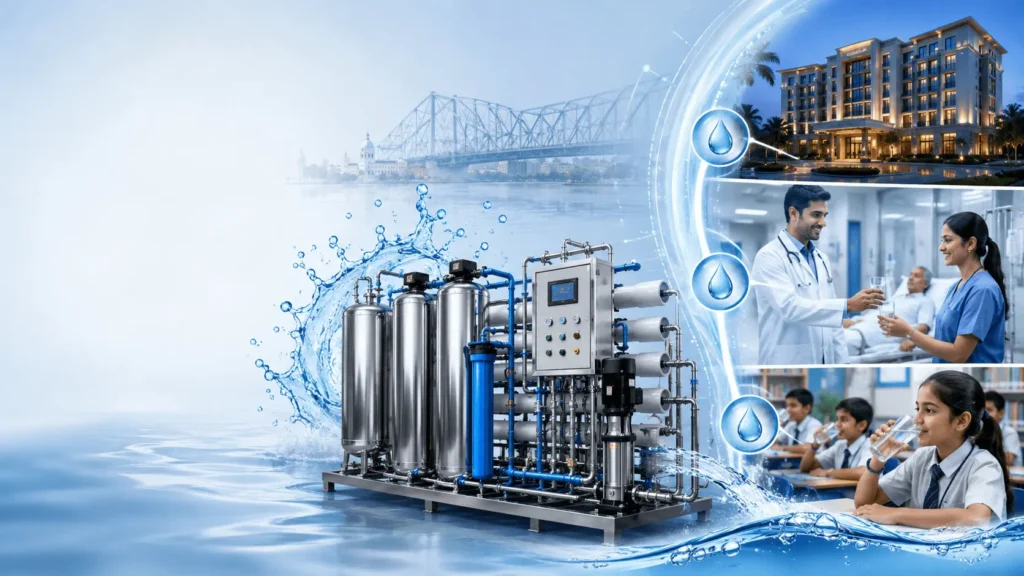
Clean, safe water is a must for every business. If you own a hotel, hospital, school, restaurant, office or commercial building, you need a continuous supply of purified water for the health, safety and daily operation of your facility. As the problem of water contamination and hard water is increasing, setting up a Commercial RO Plant in Kolkata has become one of the most intelligent investments for businesses. In Kolkata there are many sources of water supply . Treated municipal water is available in many places, but still contains dissolved salts, sediments, chlorine, bacteria, heavy metals and other impurities. These contaminants can affect the quality of drinking water, the operation of kitchen appliances, medical equipment and general hygiene standards. A professionally designed Commercial RO Plant in Kolkata removes these impurities and provides clean, safe and mineral balanced water for commercial use. If you are looking for a reliable water treatment plant in Kolkata, selecting the right commercial RO system will help increase operational efficiency, reduce maintenance costs and ensure compliance with health and safety standards. What is a Commercial RO Plant? A commercial reverse osmosis (RO) plant is a contemporary water treatment system that utilizes semi-permeable membranes to remove impurities. The water is filtered to eliminate dissolved salts, dangerous chemicals, bacteria, viruses, heavy metals and other toxins. These systems are specifically designed for commercial applications needing large volumes of purified water per day. Commercial RO plants are different from the domestic RO systems on the basis of more production capacity, longer operational life, more advanced filtration technology and ability to cater to continuous water demand. Why Commercial RO Plants Are Essential in Kolkata Water quality varies across different parts of Kolkata. High TDS levels, hardness, microbial contamination, and suspended particles can negatively impact commercial operations. Installing a commercial RO plant in Kolkata helps businesses: Ensure safe drinking water Improve customer satisfaction Protect expensive equipment Maintain hygiene standards Reduce operational expenses Comply with water quality regulations Best Commercial RO Plant for Hotels in Kolkata Hotels require purified water for guest rooms, restaurants, kitchens, laundry services, and food preparation. Clean water directly affects guest experience and business reputation. Benefits for Hotels Safe drinking water for guests Better food and beverage quality Reduced scaling in kitchen equipment Improved laundry performance Lower maintenance costs Enhanced customer satisfaction A reliable commercial RO plant in Kolkata ensures uninterrupted water purification even during peak occupancy. Best Commercial RO Plant for Hospitals in Kolkata Hospitals require the highest standards of water purity. Water is used for drinking, sterilization, laboratory testing, dialysis support systems, cleaning, and medical equipment. Benefits for Hospitals Pure water for patients and staff Better hygiene and infection control Safe water for laboratories Protection of medical equipment Compliance with healthcare standards Reliable water supply throughout the day A professionally installed commercial water treatment plant in Kolkata supports hospital operations while maintaining strict quality standards. Best Commercial RO Plant for Schools and Colleges in Kolkata Educational institutions serve hundreds or even thousands of students daily. Providing clean drinking water is essential for student health and safety. Benefits for Schools Safe drinking water for students Reduced risk of waterborne diseases Better hygiene standards Continuous purified water supply Low operating costs Easy maintenance Installing a Commercial RO Plant in Kolkata demonstrates a school’s commitment to student well-being. Features of a High-Quality Commercial RO Plant When selecting a commercial RO plant in Kolkata, look for the following features: Multi-stage filtration technology High water recovery rate Stainless steel construction Energy-efficient operation Automatic control panel Low maintenance requirements High-capacity water production Long-lasting RO membranes Easy monitoring system Professional installation support Industries That Can Benefit Besides hotels, hospitals, and schools, commercial RO systems are ideal for: Restaurants & Cafes Corporate Offices Shopping Malls Banquet Halls Pharmaceutical Companies Food Processing Units Manufacturing Industries Commercial Complexes Hostels Resorts Why Choose a Professional Water Treatment Plant in Kolkata? Benefits of Hiring a Professional Water Treatment Company in Kolkata: Custom water treatment solutions Site inspection and water analysis High-quality RO systems Professional install Annual Maintenance Contract . AMC’s Original spare parts; IT support Post-sale Service By choosing a trusted supplier you will have a RO plant that performs consistently year after year. Tips Before Buying a Commercial RO Plant Here are some of the most important factors to consider before you buy a commercial water purification system: Monitor your daily water consumption Check the quality of the raw water. Choose the right size plant. Opt for energy efficient equipment. Comparison of Maintenance Costs Warranty & AMC Service Verification. Stock spare parts. Professional buy water treatment company Kolkata.Water Treatment Company in Kolkata – Purchase from a Professional Water Treatment Company. Frequently Asked Questions Parents can supplement tut1. What is the need of Commercial RO Plant in Hotels? Hotels need purified water for drinking, cooking, food preparation, laundry and guest services to uphold quality and hygiene. Is Commercial RO Plant suitable for Hospitals? Yes. Hospitals use purified water for patient care, labs, sterilization, medical equipment and everyday operations. What capacity of commercial RO plant is suitable for schools? The capacity depends on the number of students and the daily water consumption. A water treatment expert can recommend the right system for you. How often is the Commercial RO Plant to be serviced? Routine maintenance every 3–6 months and timely filter replacement helps maintain optimal performance. How to select the best Commercial RO Plant in Kolkata? Choose a reliable Water Treatment Company in Kolkata that provides customized solutions, quality equipment, AMC services, professional installation, and reliable after-sales support. Hotels need purified water for drinking, cooking, food preparation, laundry and guest services to uphold quality and hygiene. Yes. Hospitals use purified water for patient care, labs, sterilization, medical equipment and everyday operations. The capacity depends on the number of students and the daily water consumption. A water treatment expert can recommend the right system for you. Routine maintenance every 3–6 months and timely filter replacement helps maintain optimal performance. Choose a reliable Water Treatment Company in Kolkata that provides customized solutions, quality equipment,

Industrial RO Plant in Kolkata
RO Plant

Top Benefits of Installing an Industrial RO Plant in Kolkata

Water is one of the most important resources for all the industries and maintaining the quality of water is essential for the smooth functioning. Whether it is a manufacturing unit, pharmaceutical company, food processing plant, textile factory, hospital, hotel or commercial facility, the availability of pure and clean water has a direct relation to the product quality, life of the equipment and efficiency. That is the reason why installing an Industrial RO Plant in Kolkata has become a need and not a luxury. The water quality of Kolkata may differ from place to place and source to source. Water is often found to contain dissolved salts, hardness, chemicals, bacteria and other impurities. Such contaminants can affect industrial equipment, increase the cost of maintenance and lower the efficiency of production. An ideal Industrial RO Plant in Kolkata removes away these impurities and gives your business pure water that is up to the mark as per the industrial standards. If you are looking for a reliable water treatment plant in Kolkata, investing in a sophisticated Industrial RO Plant is one of the wisest long-term decisions that your business can make. What is an Industrial RO Plant? An Industrial Reverse Osmosis (RO) Plant is a water purification system that removes dissolved salts, heavy metals, bacteria, viruses, chemicals, and other contaminants using a semi-permeable membrane. These systems are widely used in industries where high-quality purified water is required for manufacturing, processing, cleaning, and cooling applications. Modern Industrial RO Plants in Kolkata are designed to deliver consistent water quality while reducing operational costs and improving productivity. Top Benefits of Installing an Industrial RO Plant in Kolkata 1. Improves Water Quality One of the biggest advantages of installing an Industrial RO Plant in Kolkata is access to high-quality purified water. The system effectively removes harmful contaminants, ensuring safe and reliable water for industrial applications. Benefits include: Reduced Total Dissolved Solids (TDS) Removal of bacteria and viruses Elimination of unpleasant taste and odor Better water purity for production 2. Protects Industrial Equipment Hard water can lead to scaling inside boilers, pipelines, cooling towers, and machinery. Over time, these deposits reduce efficiency and increase maintenance expenses. A professional Water Treatment Plant in Kolkata supplies purified water that minimizes scale formation and corrosion, helping businesses extend equipment life. 3. Reduces Maintenance Costs Industrial machinery performs better with purified water. Less scaling means fewer repairs, reduced downtime, and lower maintenance expenses. An Industrial RO Plant helps businesses: Reduce unexpected breakdowns Lower repair costs Improve machine performance Increase operational reliability 4. Saves Water and Operating Costs Modern Industrial RO Plants in Kolkata are built with water recovery technologies that maximize water utilization. Many systems also support water recycling, helping industries reduce water wastage and utility expenses. Long-term savings often outweigh the initial installation cost. 5. Ensures Consistent Production Quality Industries such as pharmaceuticals, food processing, beverages, chemicals, textiles, and electronics require consistent water quality for manufacturing. An Industrial RO Plant in Kolkata provides purified water with stable quality, resulting in: Better product consistency Higher manufacturing standards Improved customer satisfaction Reduced production defects 6. Supports Environmental Sustainability Water conservation has become a priority for industries. Installing a Water Treatment Plant in Kolkata helps organizations recycle water, reduce waste, and comply with environmental regulations. Businesses adopting sustainable water management also strengthen their environmental reputation. 7. Meets Industry Compliance Standards Many industries must follow strict water quality regulations issued by government authorities. An Industrial RO Plant helps businesses maintain compliance by supplying purified water suitable for industrial operations. This reduces legal risks while improving operational standards. 8. Suitable for Multiple Industries Industrial RO systems can be customized for different applications, including: Pharmaceutical Industries Food & Beverage Manufacturing Textile Industries Chemical Plants Hospitals Hotels Educational Institutions Commercial Buildings Power Plants Packaging Industries This flexibility makes an Industrial RO Plant in Kolkata a valuable investment across various sectors. 9. Increases Business Efficiency Clean water improves overall production efficiency by reducing interruptions caused by equipment damage or poor water quality. Businesses experience: Faster production Lower operational losses Better workflow Increased profitability 10. Long-Term Return on Investment Although installing an Industrial RO Plant in Kolkata requires an initial investment, it delivers long-term financial benefits through lower maintenance, improved productivity, reduced water bills, and extended equipment life. For growing businesses, it is one of the most cost-effective infrastructure investments. Why Choose a Professional Water Treatment Plant in Kolkata? Choosing the right supplier is as important as choosing the right RO system. Water Treatment Plant in Kolkata provides: Customized solutions for water treatment RO membranes of high quality Professional fitting AMC & Maintenance Service Support teknis Energy efficient systems. Availability of spare parts After-sale service You can depend on your water treatment system to perform efficiently for years to come when you have experienced professionals on your side.. Industries That Benefit Most An Industrial RO Plant in Kolkata is ideal for: Manufacturing Units Textile Factories Food Processing Plants Pharmaceutical Companies Breweries Hotels & Restaurants Hospitals Schools & Colleges Commercial Buildings Chemical Industries Tips Before Installing an Industrial RO Plant Here are a few things to consider when looking into buying a RO system: Check the quality of the raw water Estimate water use per day. Choose the best plant capacity. See energy-efficient technology. Find a Good Water Treatment Company In Kolkata. Ask about AMC & maintenance services – Spare parts are easily available. Technical Support & Warranty Inquiry Frequently Asked Questions Why Kolkata based industries need an Industrial RO Plant? It eliminates dissolved salts, chemicals, bacteria and impurities, providing high quality water for industrial processes. Which Industries Need Industrial RO Plant? Industrial RO Plants find extensive usage in Manufacturing, Pharmaceuticals, Textiles, Food Processing, Hospitals, Hotels, Chemical Plants and Commercial Facilities. Industrial RO Plant – Cost Saving? It reduces equipment, reduces maintenance costs , downtime and improves water efficiency . Can Industrial RO Plants recycle the water? Yes. Many modern systems include water recovery features to help reduce operating cost and water waste. How to Choose the Best Water Treatment Plant in

Scroll to Top