
Water quality in West Bengal varies widely. Groundwater in some districts carries iron, arsenic or high hardness, while surface and municipal supplies bring turbidity and bacterial load. For factories, hospitals, hotels, housing societies and institutions, a properly planned Water Treatment Plant Installation west bengal project protects equipment, supports compliance and gives you a dependable supply. This guide covers the process, the cost drivers, how to compare quotations and what to ask before you hire.
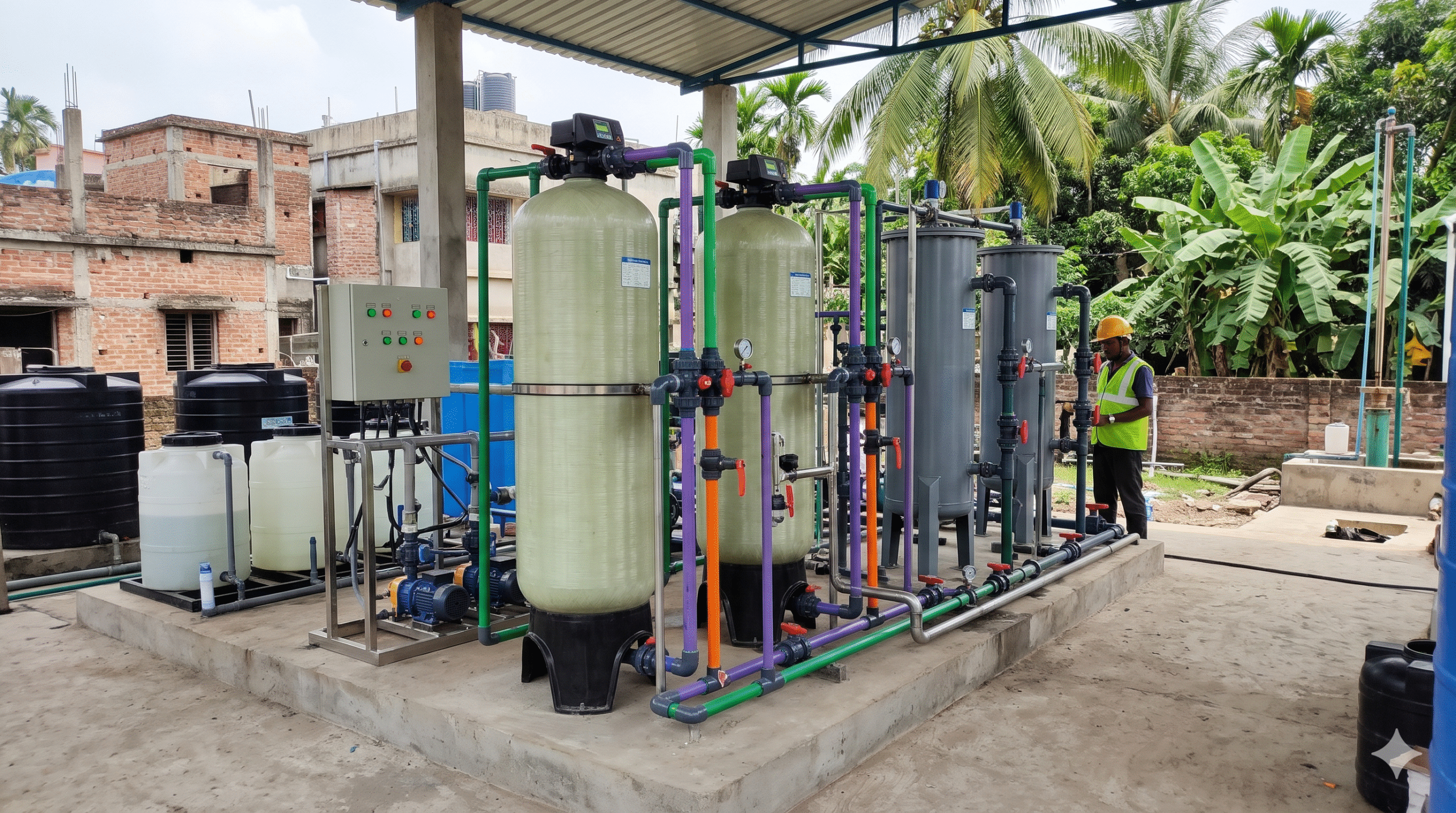
The Installation Process, Step by Step
Site Inspection
A reputable provider starts with a visit. They check available space, water source, existing piping, power supply, drainage and access for equipment. Skipping this step is a common reason for redesigns later.
Raw Water Testing
Treatment design depends on what is in your water. Testing typically covers parameters such as pH, TDS, hardness, iron, turbidity and microbiological content, depending on your source and end use. Ask for a written report, and ideally test through a laboratory you trust.
System Design and Capacity Planning
Capacity is based on your daily water requirement, peak demand, storage and future expansion. A hospital, a hotel and a factory will each need a different design even at similar volumes, because the quality target differs.
Equipment Selection
In general terms, systems combine pre-treatment (such as filtration or softening), a core process matched to your contaminants, and post-treatment or disinfection. The right choice follows your test results and use case, not a standard package.
Installation Stages
Installation usually involves civil preparation, placing tanks and vessels, piping, pump and electrical connections, and instrumentation. Good providers sequence the work to limit disruption to your operations.
Commissioning and Trial Run
Once installed, the plant is commissioned and run under real conditions. Treated water is tested against the agreed quality targets, and settings are adjusted.
Operator Training
Your staff should understand daily checks, backwashing or cleaning routines, chemical handling and basic troubleshooting. Training is as important as the equipment itself.
Installation Stages at a Glance
|
Installation Stage |
What It Involves |
What to Check |
Questions to Ask |
|
Site inspection |
Survey of space, source, power, drainage, access |
Written observations and constraints |
Who will visit, and will I get a site report? |
|
Raw water testing |
Lab or on-site analysis of water parameters |
Test report and parameters covered |
Which parameters are tested, and by whom? |
|
Design and capacity planning |
Sizing for demand, storage and expansion |
Design basis and assumptions |
How did you arrive at this capacity? |
|
Equipment selection |
Matching treatment stages to water quality |
Specifications, materials, make |
Why this technology for my water? |
|
Installation |
Civil, mechanical, piping, electrical work |
Workmanship, safety, scope split |
What is in your scope and what is mine? |
|
Commissioning and trial run |
Start-up, testing and adjustment |
Treated water results against targets |
What test results will I receive at handover? |
|
Operator training |
Hands-on training for your staff |
Manuals, checklists, attendance |
Who trains, and is documentation provided? |
|
Maintenance and AMC |
Scheduled servicing, consumables, spares |
Visit frequency, response terms |
What does the AMC cover and exclude? |
Routine Maintenance, AMC and Spare Parts
Treatment plants need regular attention. Filter media, membranes, cartridges, pumps and dosing systems all wear or foul over time. Routine tasks include cleaning, backwashing, consumable replacement, periodic water testing and record keeping.
An Annual Maintenance Contract (AMC) can bring structure to this. Check what it covers (visits, labour, consumables, spares), what it excludes, and how breakdowns are handled. Also ask about spare part availability, since a plant waiting for a part can disrupt your operations.
Cost Factors to Understand
Costs vary with the project, so no single figure fits every site. These are the main drivers:
- Plant capacity: Larger or higher-demand systems generally need more equipment and civil work.
- Technology: Different treatment processes involve different equipment, consumables and operating needs.
- Water quality: Difficult or variable source water usually needs more treatment stages.
- Site conditions: Space, access, existing pipework and location can affect effort and logistics.
- Civil and electrical work: Foundations, tanks, power connections and drainage may or may not be in the quoted scope.
- Automation: Manual, semi-automatic and fully automatic systems differ in control, monitoring and labour needs.
- Brand and materials: Component make and material grades influence durability and long-term upkeep.
- After-sales support: Service coverage, training and spares availability are part of the true cost of ownership.
How to Compare Installation Quotations
Compare scope, not just totals. Check that each quote states:
- The design basis, including your water test results and capacity assumptions.
- Equipment make, model and material specifications.
- What is included or excluded, such as civil, electrical, transport and permits.
- Commissioning, training and handover documentation.
- Warranty terms and AMC options.
- Consumable and power requirements, which affect running costs.
A quote that looks lower may leave out items that appear later as extras.
Questions to Ask Before Hiring
- Can I see the water test report and the design logic behind the proposed system?
- Which parts of the work do you handle directly, and which are subcontracted?
- What will the treated water be tested against at handover?
- What are the warranty terms, and what does the AMC cover?
- How are service calls and spare parts handled after installation?
- Which approvals or regulatory requirements apply to my facility?
If you are searching for water treatment plant installation services or comparing Water Treatment Plant Manufacturers in west bengal, ask each provider these questions in writing. The same applies when you are specifying an industrial water purification system west bengal facilities can rely on day to day.
Where Unilax Fits In
One option for an installation inquiry is to contact Unilax. For a Water Treatment Plant Installation west bengal requirement, you can contact via Water Treatment Plant Installation west bengal to enquire about their services, scope and process. Check with them for details of what they offer, including capacities, technologies and support terms. Do that with any other supplier you are considering.
Conclusion
A successful installation comes down to accurate water testing, right-sized design, a clear scope and dependable after-sales support. Take time to compare quotations on a like-for-like basis and verify applicable regulations with the relevant authorities. When you are ready, request a site visit or a written quotation from your shortlisted providers so the proposal reflects your actual water and site conditions.
Frequently Asked Questions
Q1. How do I know what capacity I need?
Estimate daily consumption, peak demand and expected growth, then share these with the provider during the site inspection.
Q2. Is raw water testing really necessary?
Yes. The treatment design should be based on your actual water quality, not assumptions.
Q3. What affects the cost of installation?
Capacity, technology, water quality, site conditions, civil and electrical work, automation, materials and after-sales support all play a part.
Q4. Do I need an AMC?
It is not mandatory in every case, but regular servicing helps keep the plant running as intended. Review what the AMC covers before signing.